
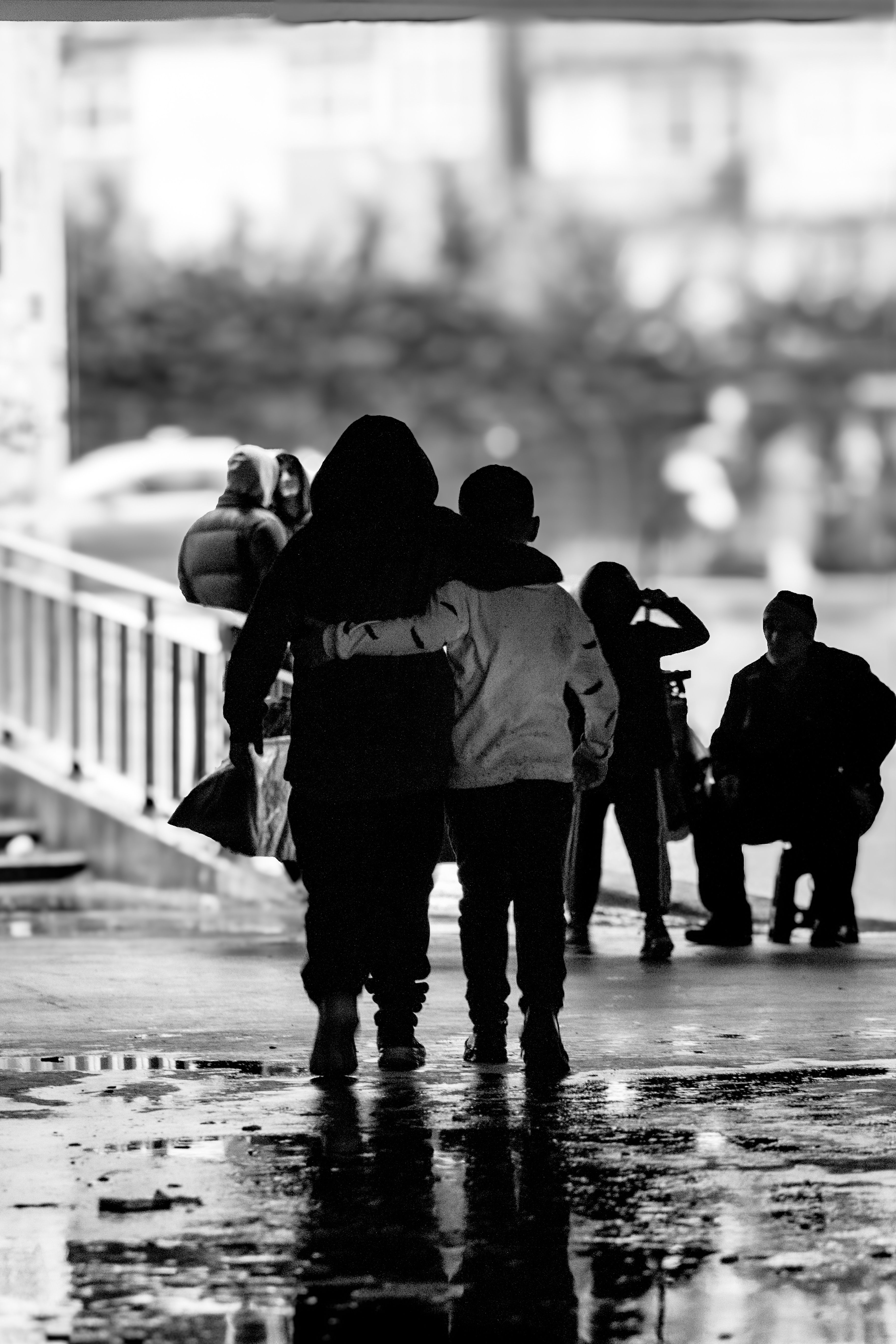
World Refugee Day raises many important questions about rights, inclusion and participation.
Here is one more:
Does deinstitutionalisation have anything to do with refugees and displaced people?
At first glance, many would probably say no. Deinstitutionalisation is often associated with institutions for persons with disabilities, children or older people.
But at its core, deinstitutionalisation is about something broader: the right to live and participate in the community, with choice, control and access to the support we need.
This raises important questions.
❓ What happens when refugees spend months or even years in large reception centres, collective accommodation or other segregated settings?
❓ What happens when refugees with disabilities lose access to support and face additional barriers to inclusion?
❓ What happens when emergency responses become long-term solutions?
Not every reception centre or temporary accommodation is an institution. However, whenever people are separated from community life, have little say over where and how they live, and lack access to community-based support, questions relevant to deinstitutionalisation begin to emerge.
As the EEG continues to promote rights-based and community-based approaches, it is worth reflecting on how these principles apply beyond traditional care systems.
For those interested in exploring these issues further, we recommend the work of the European Council on Refugees and Exiles (ECRE), which provides valuable analysis on reception conditions, inclusion and the rights of refugees and asylum seekers.
We also encourage readers to learn more about the experiences of refugees and migrants with disabilities through the Newcomers with disabilities in Sweden, which highlights barriers to inclusion and promising practices in Sweden and across Europe.
What can the deinstitutionalisation movement learn from the experiences of refugees and displaced people?