
9 October 2026
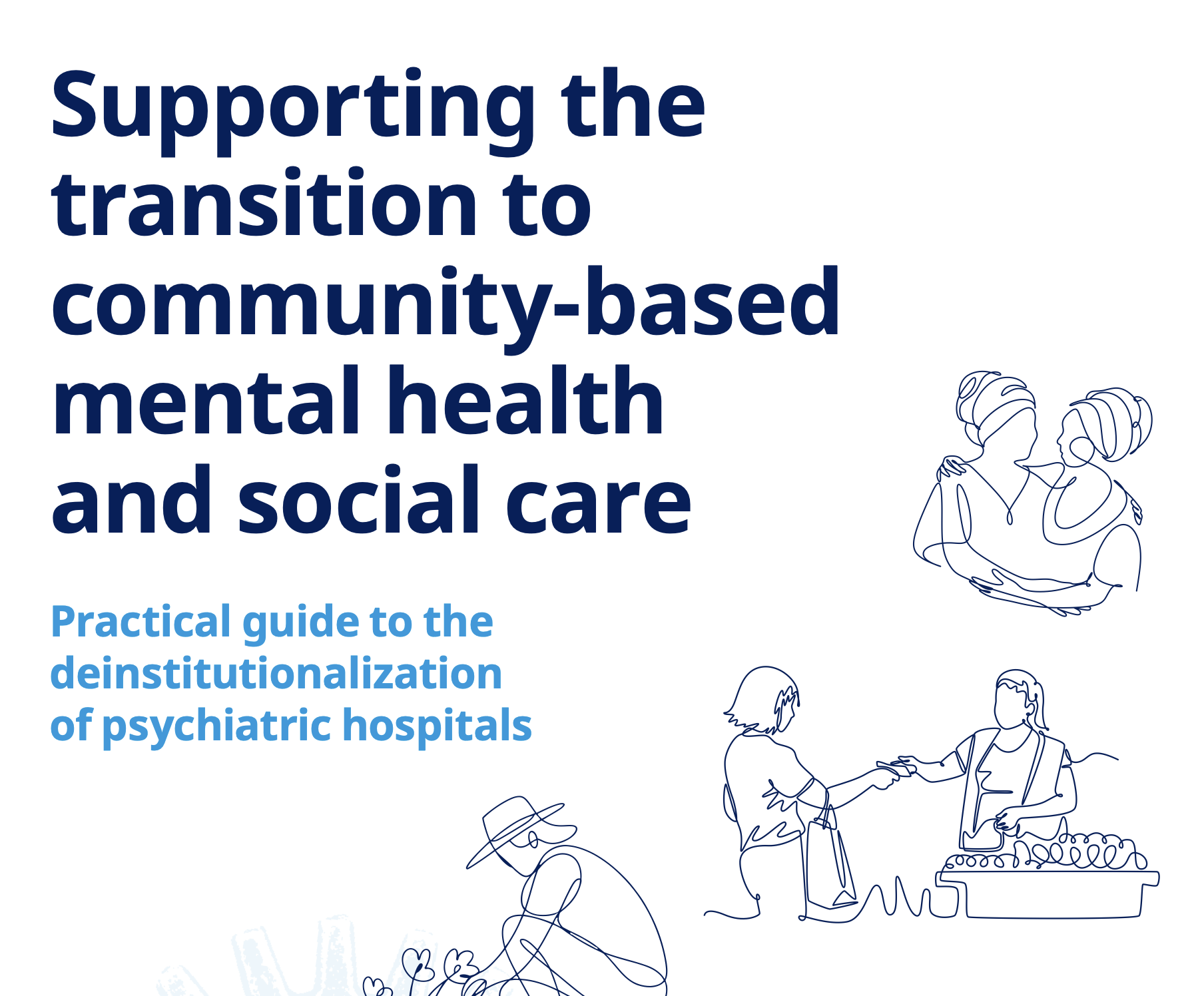
The World Health Organization (WHO) has published a new practical guide, Supporting the transition to community-based mental health and social care: Practical guide to the deinstitutionalization of psychiatric hospitals. Released on World Mental Health Day, the publication provides practical guidance for advancing the transition from long-term psychiatric hospital care towards rights-based, person-centred mental health and social care in the community.
The guide is primarily intended for psychiatric hospital leaders and decision-makers working to advance deinstitutionalisation for adults who have experienced long stays in psychiatric hospitals. It recognises that institutional care continues to absorb significant resources while often separating people from their communities, restricting their autonomy and exposing them to risks of human rights violations.
From institutional care to community-based support
A central message of the publication is that deinstitutionalisation cannot be achieved through hospital closures or discharge policies alone. It requires broader transformation of mental health and social care systems, including changes to policies, legislation, financing, service provision and professional practices.
The guide highlights the importance of developing comprehensive community-based mental health services, ensuring access to housing support and strengthening cooperation between hospitals, public authorities, community services, people with lived experience, families and professionals.
Practical guidance for implementing change
WHO organises its recommendations around three phases of action:
- Plan: Establish the foundations and direction for deinstitutionalisation.
- Prepare: Develop the conditions and capacities needed to support the transition.
- Provide: Implement changes that enable people to move towards community-based care and support.
The publication also identifies three areas where psychiatric hospitals can contribute to the transition: reducing admissions and lengths of stay; transforming care within hospitals; and supporting discharge, continuity of care and community participation.
By combining these elements, the guide offers an adaptable framework for institutions and decision-makers working within different national contexts.
Why this matters for deinstitutionalisation in Europe
The publication is particularly relevant to the work of the European Expert Group on the Transition from Institutional to Community-Based Support (EEG).
The EEG advocates for a comprehensive approach to deinstitutionalisation, grounded in human rights, independent living, individual choice and access to appropriate support within the community.
The new WHO guide reinforces the importance of looking beyond the physical closure of institutions and addressing the policies, funding arrangements and support systems that determine whether people can genuinely live and participate in their communities.
It also provides a useful reference for discussions on monitoring deinstitutionalisation progress. Reducing institutional capacity is not sufficient if people continue to experience segregation, lack of choice or inadequate community-based support.
The EEG welcomes the publication as a resource for policymakers, service providers, civil society organisations and others working towards the transition from institutional to community-based support.
Read the publication:
WHO – Supporting the transition to community-based mental health and social care