
What the European Commission’s findings mean for reform, independent living and future EU investment
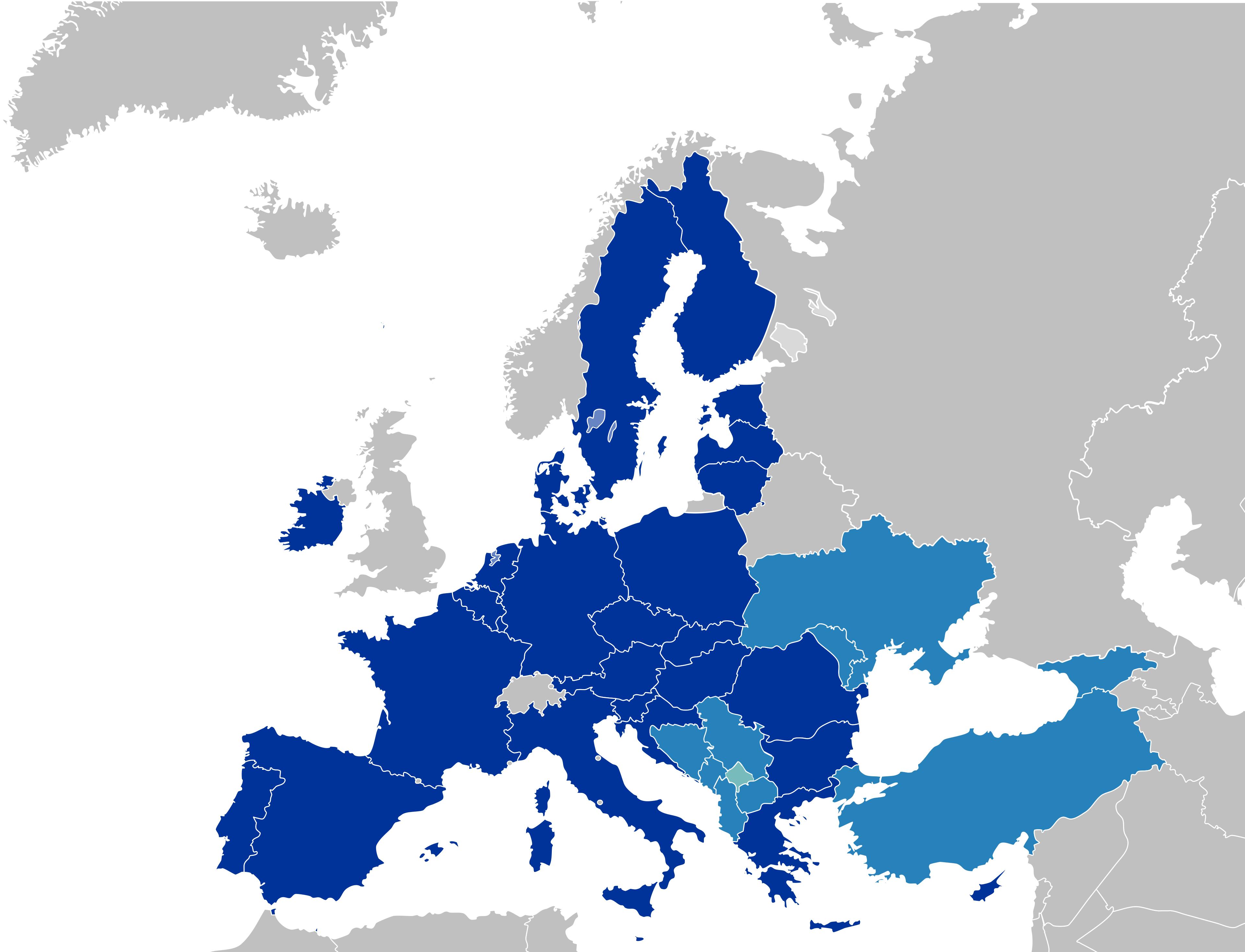
On 4 November 2026, the European Commission published its annual Enlargement Package, assessing progress and remaining challenges in countries seeking to join the European Union. Among the many areas covered, deinstitutionalisation and the transition towards family- and community-based care feature prominently across the country reports.
The findings send an important message: deinstitutionalisation is not merely a matter of social service reform. It is closely connected to fundamental rights, equality and social inclusion, and therefore to the broader process of European integration.
The European Expert Group on the Transition from Institutional to Community-based Care (EEG) welcomes the Commission’s continued attention to these issues. The 2026 reports recognise important achievements, but also reveal persistent gaps between policy commitments and their implementation. In several countries, institutional care remains prevalent, community-based alternatives are insufficient, and reforms progress at different speeds for different groups.
As the EU prepares its next long-term budget for 2028–2034, the findings also raise a crucial question: how can future EU financial assistance help turn deinstitutionalisation commitments into sustainable changes in people’s lives?
Progress is visible, but remains uneven
The 2026 Enlargement Reports acknowledge progress in several countries, particularly in developing policies and alternative forms of care.
In Albania, the Commission reports steady progress in deinstitutionalisation, including for children without parental care and children with disabilities. A new law on alternative care has been adopted and the national deinstitutionalisation plan updated. However, the high concentration of children with disabilities in institutions remains a concern, and the Commission calls for further development of family- and community-based services at local level.
Montenegro has continued implementing its Deinstitutionalisation Strategy, with 61% of the activities in its 2025 action plan completed. The Commission nevertheless identifies the need for further efforts to strengthen family-based alternatives and support services.
In North Macedonia, implementation of the National Deinstitutionalisation Strategy 2018–2027 continues. The Commission acknowledges progress in the transition towards independent living and community inclusion, while emphasising that accessible, person-centred support services need further development.
Ukraine has also made steady progress in reforming children’s care, prioritising the right of every child to grow up in a family environment. The number of children in institutions has decreased since 2023. Nevertheless, 23,524 children remained in institutions in 2025, with children with disabilities particularly affected. Local authorities continue to face serious constraints in developing sustainable community-based services and alternative care.
In Moldova, the Commission reports further progress in deinstitutionalising children, with 339 children leaving residential institutions during the reporting period. However, 225 new admissions were also recorded, illustrating the importance of preventing family separation and new placements, alongside supporting children to leave institutions.
These examples demonstrate that progress is possible. At the same time, they highlight the need to assess reforms not only through the adoption of strategies or the closure of institutions, but also through their practical impact on children, adults and families.
The persistent gap between institutional care and community-based support
One of the strongest messages emerging from the reports is that the availability of community-based support remains a major obstacle to meaningful deinstitutionalisation.
This is particularly evident in reforms affecting adults with disabilities.
In Moldova, the Commission describes the deinstitutionalisation of adults with disabilities as progressing slowly. Large residential institutions remain operational and continue to absorb a significant share of public expenditure, while community-based services have expanded only modestly. The Commission calls for a costed national deinstitutionalisation roadmap and the progressive redirection of resources towards accessible, person-centred support.
In Ukraine, implementation of the Strategy on Deinstitutionalisation of Care for Adults with Disabilities and Elderly Persons until 2034 needs to advance. The Commission highlights insufficient community-based services, including supported living and day care, and the lack of sustainable financing. The war creates additional risks, as evacuation and displacement may lead to continued or new institutionalisation, particularly among persons with disabilities and older people.
In Serbia, an action plan for implementing the deinstitutionalisation strategy was adopted in November 2025 after several years of delay. However, the Commission continues to call for faster progress towards independent living and accessible community-based support. It also raises concerns about the rights of people living in residential institutions, including women with disabilities who face gender-specific forms of violence.
The situation is particularly challenging in Bosnia and Herzegovina, where the Commission reports a lack of progress in developing and implementing a comprehensive deinstitutionalisation strategy for persons with disabilities. Institutional care remains prevalent, while community services supporting independent living are scarce. The need to accelerate the reform of children’s care is also emphasised.
In Kosovo, progress towards family- and community-based approaches for children contrasts with a continued lack of progress in policy development for deinstitutionalisation and independent living for persons with disabilities.
The Commission also identifies limited progress in Georgia, including significant delays in the transition from large residential institutions to community-based services, particularly for persons with disabilities and people living in mental health facilities.
In Türkiye, further efforts are needed to prevent institutionalisation and accelerate the transition towards independent living. While the expansion of emergency foster care represents progress for children in need of protection, community-based support for older people and persons with disabilities remains underdeveloped.
Taken together, these findings highlight an important distinction: progress in reforming children’s residential care does not necessarily mean that comparable progress is being achieved for adults with disabilities or older persons.
They also reinforce a fundamental principle of deinstitutionalisation: closing institutions or moving people into smaller residential settings is not sufficient if individuals cannot exercise choice and control over their lives or access the support they need in the community.
Independent living as a benchmark for EU accession
An important development in the 2026 reports is the Commission’s use of its Guidance on independent living and inclusion in the community of persons with disabilities in the context of EU funding, adopted in 2024.
The Guidance provides a framework for supporting the transition from institutional care to independent living, in line with Article 19 of the UN Convention on the Rights of Persons with Disabilities (UNCRPD). It emphasises individual choice, person-centred support, access to mainstream services and the responsible use of EU funding.
Several Enlargement Reports explicitly refer to the Guidance when assessing reforms, including those for Albania, Montenegro, North Macedonia, Serbia and Türkiye.
This is a welcome development. It demonstrates how principles and policy tools developed at EU level can also inform the assessment of reforms in enlargement countries.
However, translating these principles into practice requires more than legislative alignment.
Independent living means that persons with disabilities can choose where, how and with whom they live, with access to personal assistance and other community-based support where needed. It also requires accessible housing, transport, education, healthcare and employment opportunities, alongside respect for legal capacity and individual decision-making.
For children, deinstitutionalisation must be accompanied by measures to prevent family separation, strengthen families and ensure access to quality family-based alternative care where necessary.
Across all groups, reforms must prevent the replacement of large institutions with smaller settings that continue to restrict autonomy, choice and participation.
The Commission’s findings demonstrate why independent living and community inclusion should remain central to the EU’s assessment of progress in enlargement countries.
From monitoring progress to making reforms happen
The reports also raise questions about how progress in deinstitutionalisation is measured.
The adoption of a strategy, the establishment of new services or a reduction in the number of people living in institutions can indicate progress. However, none of these measures alone provides a complete picture of whether people’s rights are being realised.
Meaningful monitoring should consider three interconnected dimensions.
First, the number of people living in institutions and the movement into and out of institutional care. This includes identifying who remains institutionalised, whether new admissions continue and whether people are genuinely moving into independent or family-based living arrangements.
Second, the actions and resources supporting the transition. These include the development and accessibility of community-based services, changes in legislation and policy, the allocation of financial resources and the capacity of local authorities and service providers.
Third, the actual outcomes for people. Monitoring should examine whether individuals experience greater autonomy, choice, inclusion and quality of life, and whether children can grow up in safe and supportive family environments.
The 2026 reports illustrate the importance of considering all three dimensions together. For example, Moldova’s figures on children leaving and entering institutions demonstrate why monitoring new admissions is as important as recording departures. Similarly, concerns about the continued financing of large institutions highlight the need to track how resources are allocated.
The EEG considers that stronger, more consistent monitoring of deinstitutionalisation would support both national reform processes and EU-level assessments of progress.
Such monitoring should be developed and implemented with the meaningful participation of organisations of persons with disabilities, organisations representing other groups affected by institutionalisation and relevant civil society stakeholders.
Financing the transition: The role of the next EU budget
The challenges identified in the 2026 Enlargement Reports cannot be addressed through political commitments alone.
Deinstitutionalisation requires sustained investment in accessible housing, personal assistance, family support, community-based social services, workforce development and the capacity of local authorities. It also requires careful planning to redirect resources away from institutional care without interrupting essential support during the transition.
This makes the ongoing negotiations on the EU’s Multiannual Financial Framework (MFF) for 2028–2034 particularly relevant.
Under the Commission’s proposal, the future Global Europe instrument would provide financial and technical support to enlargement countries, including assistance linked to reforms and investments. The Commission has also indicated that objective-based plans would remain an important mechanism for connecting financial assistance with the delivery of reforms.
This creates an opportunity to ensure that the priorities identified in the Enlargement Reports are reflected in future EU financial assistance.
For the EEG, three considerations are particularly important.
EU funding should actively support deinstitutionalisation and independent living. This means prioritising the development of sustainable, accessible and rights-based community services, rather than investments that maintain, expand or reproduce institutional models of care.
Financial support should be linked to meaningful reform objectives and measurable outcomes. Where relevant, reform and investment plans should include clear deinstitutionalisation objectives, appropriate indicators and mechanisms to monitor both investments and their impact on people’s lives.
Civil society must be involved in planning and monitoring investments. Organisations of persons with disabilities and other representative organisations should have meaningful opportunities to influence decisions, identify risks and assess whether funding contributes to genuine community inclusion.
The Commission’s 2024 Guidance on independent living offers an important reference point for these discussions, particularly regarding the use of EU funding in line with the UNCRPD.
As negotiations on the next MFF and Global Europe continue, there is an opportunity to strengthen coherence between the EU’s enlargement priorities, its human rights commitments and the financial instruments intended to support reforms.
The EU should not only identify what needs to change, but also help ensure that its investments contribute to achieving those changes.
From commitments to real change
The 2026 Enlargement Reports show that deinstitutionalisation is increasingly recognised as an important part of the reform agenda in countries seeking EU membership.
They also demonstrate that progress remains uneven. While some countries have advanced in reforming children’s care, the transition towards independent living for adults with disabilities and older persons often remains slow. Institutional care continues to receive significant resources in some countries, and accessible community-based support remains insufficient across much of the enlargement region.
For the EEG, the findings reinforce three priorities: accelerating the implementation of rights-based deinstitutionalisation reforms; ensuring that EU financial assistance supports independent living and community inclusion; and strengthening monitoring to capture real changes in people’s lives.
The enlargement process provides an important opportunity to advance these objectives. The next EU budget can help make the difference between strategies that remain on paper and reforms that deliver sustainable results.
The measure of successful deinstitutionalisation is not simply how many institutions close, but whether people can exercise their right to live independently and be included in the community.
Building on the findings of the 2026 Enlargement Reports, the EEG will organise an online study session on 15 December 2026 to explore experiences and lessons learned from deinstitutionalisation reforms in EU accession countries. The discussion will provide an opportunity to reflect on progress, persistent challenges and practical approaches to advancing independent living and community inclusion.